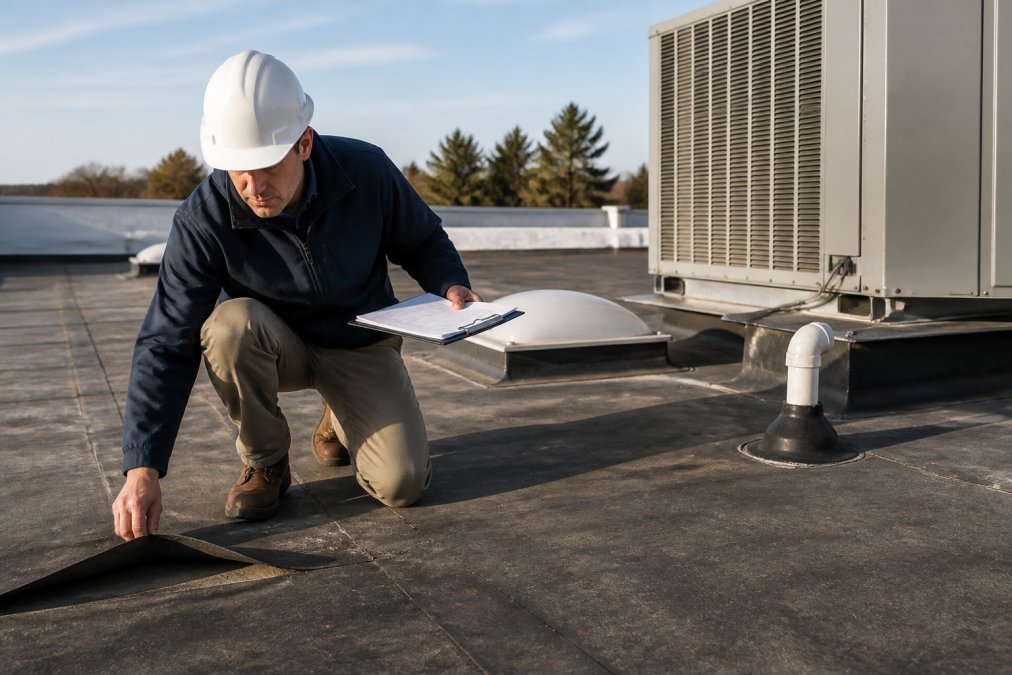
 blog
blog
Commercial Roof Maintenance Checklist: 2026 Guide
Table of Contents
- Why Commercial Roof Maintenance Matters
- Roof Surface and Membrane Inspection Checklist
- Flashing, Penetrations, and Seals Assessment
- Drainage System and Gutter Maintenance
- Commercial Roof Inspection Cost and Planning
- Preventative Roof Maintenance Best Practices
- Creating Your Commercial Roof Maintenance Plan Template
- Frequently Asked Questions
Last Updated: September 23, 2026
Why Commercial Roof Maintenance Matters
A commercial roof protects your building's most valuable asset: the structure itself. Water infiltration causes costly damage. Mold spreads. Structural integrity fails. The cost of ignoring a failing roof can reach tens of thousands of dollars in repairs.
That's why regular commercial roof maintenance matters. It catches problems early. It extends your roof's lifespan. It protects your warranty coverage. At Leak Remedy, we understand how preventative maintenance saves property owners thousands in emergency repairs and water damage claims.
Most commercial property owners don't inspect their roofs until something leaks. By then, the damage is done. A proactive commercial roof maintenance checklist changes that equation. You spot issues before they become emergencies.
This guide walks you through the essential steps of a commercial roof maintenance plan. We'll cover what to inspect, how often, and what to watch for.
Roof Surface and Membrane Inspection Checklist
The roof membrane is your first line of defense against weather. It needs regular inspection to catch deterioration early.
Start with a visual walkthrough of the entire roof surface. Look for these specific signs:
- Blistering, bubbles or raised areas in the membrane
- Seam separation, gaps where membrane seals are pulling apart
- Ponding water, standing water that doesn't drain within 48 hours
- Thermal shock damage, cracks from extreme temperature swings
- Surface wear, visible thinning or erosion of the membrane coating
- Debris accumulation, leaves, dirt, or other material blocking drainage
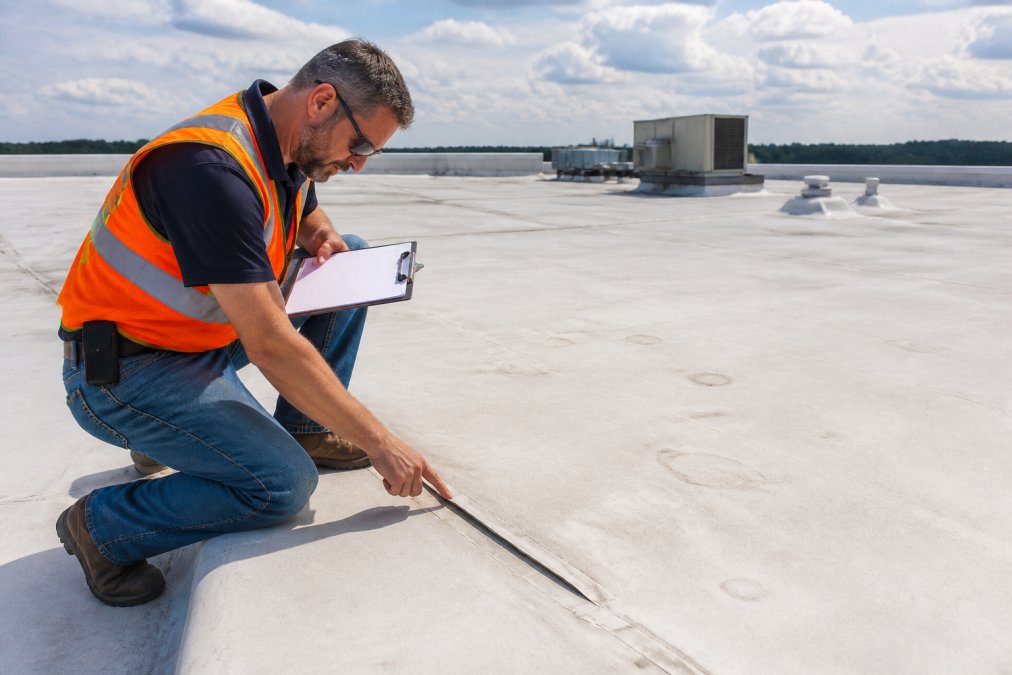
Check the entire roof systematically. Don't skip edges or corners. Walk the perimeter carefully. Note any soft spots or areas where your foot sinks into the membrane.
A moisture survey using infrared thermography reveals wet areas invisible to the naked eye (C1153 Standard Practice for Location of Wet Insulation in Roofing Systems Using Infrared...). Thermal imaging detects temperature differences that indicate moisture trapped beneath the surface. This tool is invaluable for identifying early-stage water intrusion before visible damage appears.
Document everything. Take photos. Record locations. This documentation protects your warranty and helps contractors understand what needs repair.
Flashing, Penetrations, and Seals Assessment
Roof penetrations are where problems start. HVAC units, vents, skylights, and curb seals create openings in the membrane. Water finds these gaps.
Inspect every penetration carefully:
- Curb seals, the flashing around equipment bases
- HVAC unit seals, where heating and cooling equipment connects to the roof
- Roof penetrations, pipes, vents, and electrical conduits
- Parapet wall flashing, where the roof meets vertical walls
- Expansion joints, areas where the roof assembly moves with temperature changes
Check for separation between the flashing and the membrane. Look for cracks in sealant. Verify fasteners are tight. Missing or deteriorated sealant is a common entry point for water.
Expansion joints deserve special attention. These joints accommodate the roof assembly's natural movement. When they fail, water seeps into structural components. Inspect the seal integrity quarterly, especially after temperature swings.
The connection between the roof and parapet walls is critical. Wind-driven rain targets these areas. Make sure the flashing overlaps properly and sealant is intact.
Drainage System and Gutter Maintenance
A roof's drainage system must work perfectly. Clogged gutters and downspouts force water to pool on the roof. Ponding water causes membrane deterioration and structural damage.
Inspect your drainage system monthly:
- Scuppers, openings that allow water to drain from the roof
- Downspouts, channels that direct water away from the building
- Gutters, collection channels along roof edges
- Drain inlets, where water enters the internal drainage system
Remove debris from gutters, scuppers, and drain inlets.
Commercial Roof Inspection Cost and Planning
Commercial roof inspection costs depend on roof size, complexity, and your location. Smaller roofs cost less to inspect. Larger commercial properties with multiple HVAC units and penetrations cost more. Budget for a professional inspection annually. Many property managers schedule inspections in spring and fall to catch seasonal damage. After severe weather, inspect immediately.
How Maintenance Failures Void Warranties
Most commercial roof warranties require documented, regular maintenance to remain valid. This is a critical detail many property owners overlook until they file a claim and discover their warranty has been voided.
Common Warranty Voiding Scenarios:
- Failure to inspect regularly: Most warranties require documented inspections at least annually. If you cannot produce inspection records, the manufacturer may deny claims for defects that could have been caught earlier.
- Neglected drainage maintenance: Allowing ponding water to persist for more than 48 hours violates most warranty terms. Manufacturers argue that proper drainage is the property owner's responsibility. Water damage resulting from clogged drains is typically not covered.
- Unsealed penetrations: If flashing around HVAC units, vents, or pipes is not maintained and water intrusion occurs, the manufacturer may deny the claim, arguing that the failure was due to improper maintenance, not a defect in the membrane itself.
- Deferred repairs: Delaying repairs of known issues (blistering, seam separation, cracks) can void warranty coverage. Manufacturers expect problems to be addressed promptly. If damage spreads due to delayed repair, they may refuse to cover the extended damage.
- Incompatible repairs: Using non-approved repair materials or contractors not certified by the manufacturer can void the warranty. Some warranties require that repairs be performed by the original installer or a manufacturer-approved contractor.
- Failure to document maintenance: Even if you perform maintenance, lack of documentation is often treated as non-compliance. The manufacturer has no proof the work was done. Keep detailed records with dates, photos, and contractor information.
Warranty Duration and Maintenance Obligations:
Creating a Maintenance Plan That Protects Warranty Coverage
Documentation is essential. Keep records of every inspection, repair, and maintenance activity. This protects your warranty. It demonstrates due diligence to insurance companies. It provides a baseline for tracking the roof's condition over time.
Create a commercial roof maintenance plan template that tracks:
- Inspection dates and findings: Document what was inspected and what condition it was in
- Repairs completed: Record what was fixed, when, and by whom
- Maintenance activities: Note debris removal, sealant reapplication, drain cleaning, and other preventative work
- Costs: Track expenses to support insurance claims and budget planning
- Contractor information: Record the name and certification of any professional who performed work
- Photos: Attach images showing the roof's condition before and after maintenance
Working with Contractors and Maintaining Warranty Compliance
Work with professionals who understand your roof type and warranty requirements. Different membranes require different maintenance approaches. A contractor experienced with your specific roof assembly will catch issues others miss.
Preventative Roof Maintenance Best Practices
Preventative roof maintenance extends your roof's lifespan by years. It reduces emergency repairs. It keeps your warranty valid. But maintenance only works if it's performed safely and documented properly.
Core Maintenance Activities
Here are the essential practices:
- Monthly visual inspections, walk the roof and look for obvious damage
- Quarterly detailed checks, focus on penetrations, flashing, and drainage
- Annual professional inspection, hire a certified inspector to evaluate membrane integrity
- Post-storm assessment, check for wind damage, debris, or water intrusion after severe weather
- Debris removal, clear leaves, dirt, and other material from the roof surface
- Sealant maintenance, reapply sealant around penetrations and flashing as needed
- Gutter and drain cleaning, keep drainage systems clear
- HVAC unit seals, verify seals around rooftop equipment remain intact
Safety and OSHA Compliance for Roof Access
Any employee accessing a commercial roof must follow OSHA regulations. This is non-negotiable from both a legal and liability standpoint.
Fall Protection Requirements:
- Personal fall arrest systems (PFAS) must be worn when working near unprotected edges or holes
- Guardrail systems must be installed around roof perimeters if employees regularly access the roof
- Safety net systems or warning line systems may be alternatives depending on roof configuration
- Anchor points must be identified and certified to support the weight of a falling worker plus deceleration forces
Inspection and Documentation:
Weather and Seasonal Considerations:
Professional Inspections:
Scheduling and Documentation
Schedule maintenance during mild weather. Spring and fall are ideal. Avoid inspections during extreme heat or cold, which can affect membrane condition and increase safety risks.
Creating Your Commercial Roof Maintenance Plan Template
A written commercial roof maintenance plan keeps you organized and accountable. It ensures nothing gets missed.
Your template should include:
| Inspection Item | Frequency | Last Checked | Next Due | Notes |
|---|---|---|---|---|
| Membrane surface | Monthly | Look for blistering, separation | ||
| Flashing and seals | Quarterly | Check for gaps and deterioration | ||
| Penetrations and HVAC seals | Quarterly | Verify sealant integrity | ||
| Drainage system | Monthly | Clear debris from gutters, scuppers | ||
| Parapet wall flashing | Quarterly | Check overlap and sealant | ||
| Expansion joints | Quarterly | Inspect seal condition | ||
| Post-storm assessment | As needed | Document any visible damage | ||
| Professional inspection | Annually | Hire certified inspector |
Frequently Asked Questions
How often should a commercial roof be inspected?
Most commercial roofs benefit from inspections twice yearly, spring and fall, to catch seasonal damage and debris buildup. After severe weather, storm damage, or thermal shock events, schedule an additional inspection within 48 hours. Properties in areas prone to ponding water or with complex roof assemblies may need quarterly checks. Regular inspection frequency protects your warranty coverage and extends roof lifecycle.
What is the typical cost of a commercial roof inspection?
Commercial roof inspection cost depends on roof size, complexity, accessibility, and whether infrared thermography or moisture survey equipment is used. Pricing varies significantly based on facility management needs and local market conditions. Contact Leak Remedy for a quote tailored to your property's specific requirements. Many property owners find that preventative inspections pay for themselves by avoiding costly water infiltration damage.
What should a commercial roof maintenance plan template include?
A solid maintenance plan template documents inspection dates, findings, repairs completed, warranty details, and scheduled preventative maintenance tasks. Include seasonal requirements, penetration seal checks, expansion joint integrity notes, and debris clearance schedules. Track fastener conditions, ballast placement, and any curb seal repairs. Digital maintenance tracking tools help organize this data and ensure nothing is missed between inspections.
How long does a commercial roof restoration or coating last?
Quality roof coatings and restorations typically extend roof lifecycle by 10-15 years when combined with preventative maintenance. Lifespan depends on climate exposure, thermal shock frequency, maintenance adherence, and coating type. A restoration addresses immediate issues like seam separation and blistering, while coatings add protective layers against UV and weather damage. Discuss warranty documentation with your contractor to confirm coverage duration and conditions.